
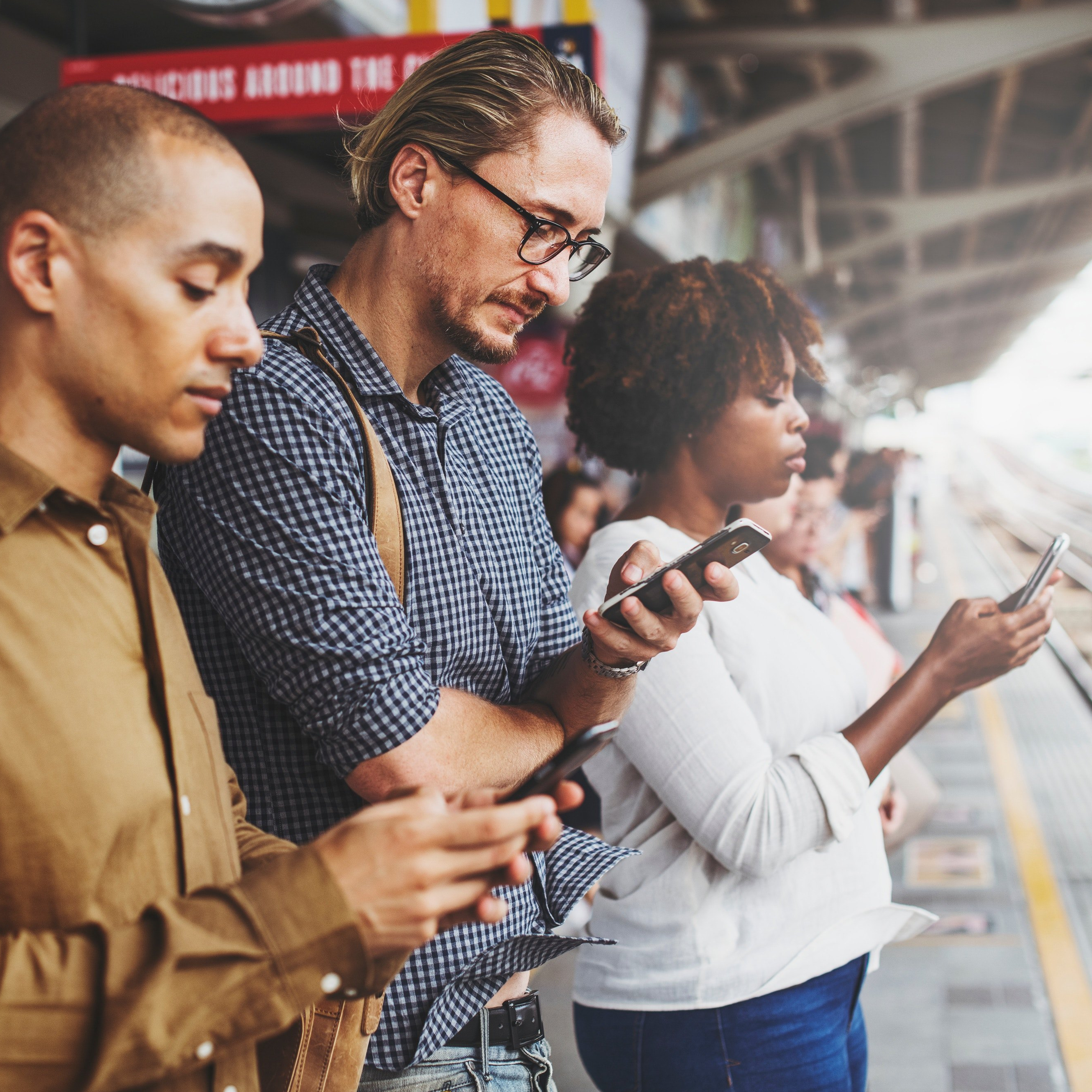
Social media is an increasingly large part of our every day lives. It is relevant in any topic of discussion due to the fact that politicians, CEOs, artists, and everyday people use mediums such as Twitter or Instagram. Whether or not you use it frequently is a choice everyone makes for themselves, but did you think your choice can be predicted by your personality type and traits? While some traits are more obvious as they are at the front of any social media platform, others are a little more surprising.
A study by Zuniga et. Al. compares how five traits are related to peoples’ social media use overall, social media use for news, and social media use for interacting with people online. While this obviously doesn’t cover the entirety of what people use social media for, it provides different aspects of social media to look at and compare. The study takes a look at different people over time to compare their social media use and personality traits.
The Big Five traits were chosen to represent a majority of the personality types relevant to social media studies. Those traits include extroversion, agreeableness, conscientiousness, neuroticism, and openness. By using these traits they attempt to make their findings easily comparable to other studies. These five traits form the crux of how Zuniga et. Al. conduct their study across 20 different countries (list below). Most studies on social media have been conducted in the United States and this study sheds some much needed light on the rest of the world.
Due to the fact that countries speak different languages, it is important to ask the right questions lest the study is lost in translation. Since this kind of study is conducted over a large area with many people over time, the researchers used Nielsen, a polling company, to help pool together the data. This gave the researchers the ample data set needed to understand who used social media the most.
Zuniga et. Al. discovered that Argentina, Brazil, and Chile used social media the most while Japan and the United Kingdoms used them the least. That in mind, they found that being more extroverted, conscientious,or agreeable made you more likely to use social media overall, for news, or to interact with others. While extroversion was expected the most to be correlated, being conscious of others was not necessarily expected to influence social media use. On the other hand, openness was another trait which had no predictable outcome but displayed only more social media use. A more open person would use social media less for news and interaction. Which begs the question, what do you open-minded people use Snapchat and Facebook for?
The most surprising one of all however, being more neurotic or emotional stable actually meant social media was used less for everything, news or social interaction. How could this be? Perhaps it is better understood as the opposite, the more unstable a person was emotionally, the more they would use social media. This can be understood and expected a little more easily. Overall, the study shows that who we are can really push us towards heavy social media use. As such, the people we value and therefore the people we aspire to be, must be a strong predictor on how we consume media.
In Depth
Social media is a strong influence on peoples’ daily lives and as such merit studies to understand the influence it carries. As such it is important to hone in important aspects rather than any simply related topic and ensure an accurate picture is taken given the breadth or range of the statement made. This research could be useful to marketers and anthropologists alike as they can make use of the different facets of social media. As the paper states, it is “interactive, self-directed, and offers multiple types of user experiences” which result in the individual user the main determinant of how the medium is used and what they are motivated to do with it.
The study does a good job of collecting a lot of data and covering for other studies’ research flaws but presents the data in an unhelpful way. The methods only mention work done to control for influences on the observed variables but don’t spend any time attempting to explain how this is done. Some problems can be found in the charts which present very high alpha values which seem to weaken the arguments made. Their data also lacked any countries from Africa which can add more perspective to the image. Lastly, their data collection is brought up to be self reported and while the paper does acknowledge the weakness and error of this, the study was conducted as is. The study can be further strengthened by creating questionnaires that contain answers that score the individual indirectly. This would not to allow internal delusions to influence the subject’s answers and form better data.
Below is the list of studied countries:
- Argentina
- Brazil
- Chile
- China
- Estonia
- Germany
- Indonesia
- Italy
- Japan
- Korea
- New Zealand
- Philippines
- Poland
- Russia
- Spain
- Taiwan
- Turkey
- United Kingdom
- Ukraine
- United States
Gil de Zúñiga, Homero & Diehl, Trevor & Huber, Brigitte & Liu, James. (2017). Personality Traits and Social Media Use in 20 Countries: How Personality Relates to Frequency of Social Media Use, Social Media News Use, and Social Media Use for Social Interaction. Cyberpsychology, Behavior, and Social Networking. 20. 540-552. 10.1089/cyber.2017.0295.
John, O.P. and Srivastava, S. (1999) The Big Five Trait Taxonomy: History, Measurement, and Theoretical Perspectives. In: Pervin, L.A. and John, O.P. Eds., Handbook of Personality: Theory and Research, Vol. 2, Guilford Press, New York, 102-138.
Pavickova, Katka. https://unsplash.com/@katerinapavlickova
Researcher App. https://www.researcher-app.com/
Unsplash. Photo Repository. https://unsplash.com/
 The Lead
You must be logged in to post a comment.